Washer Won't Spin but Makes Noise? Here's What the Sound May Mean
Your washer is running. The drum is not moving. Clothes sit in a tub full of water, and some kind of noise keeps going. That combination tells you something is wrong. It does not always tell you exactly what.
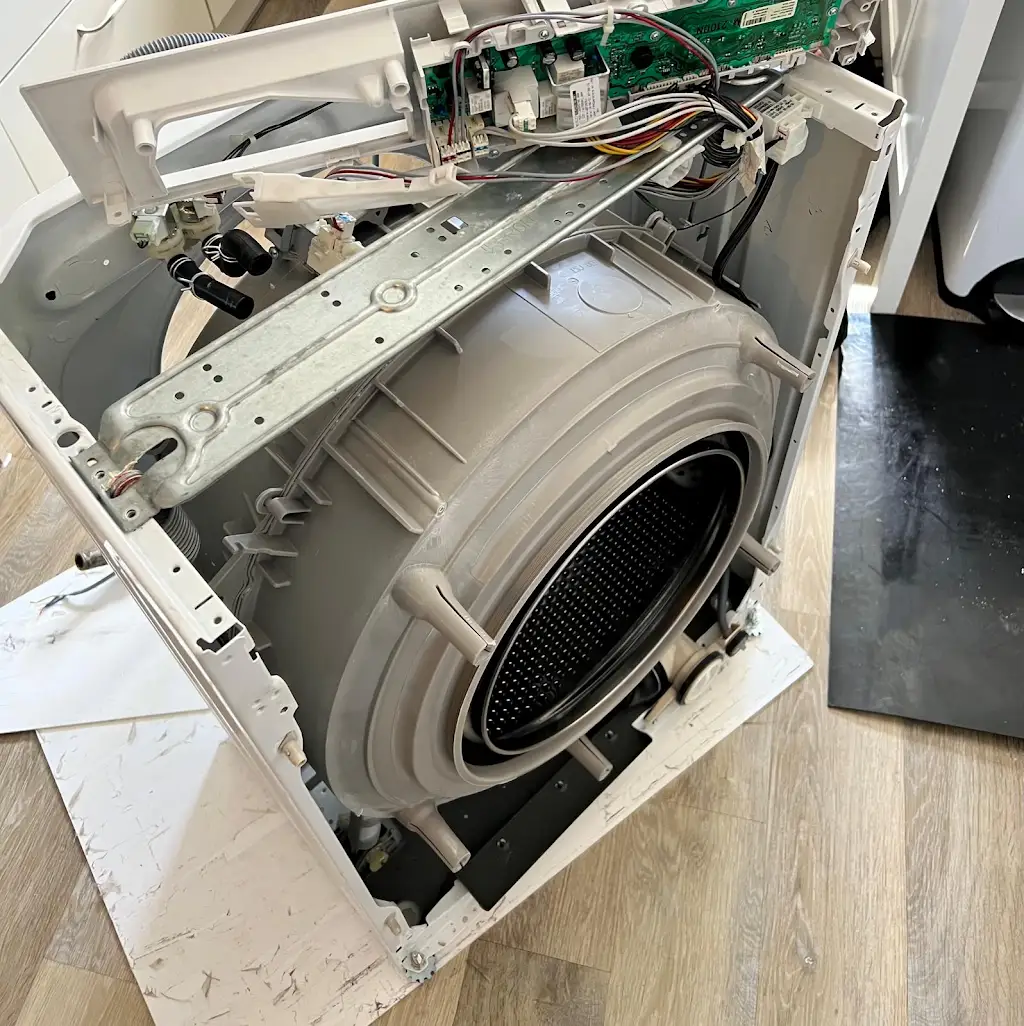
Expert Appliance Troubleshooting for Upper West Side
The good news: a washer that makes noise but will not spin is not automatically a dead machine. The type of noise, where you are in the cycle and whether water is still sitting in the tub all point toward a cause. Some problems are simple. Others need a professional.
This guide walks you through what the noise likely means, what you can safely check at home, and when to stop and call for help.
Quick Answer: A washer that makes noise but does not spin may have an unbalanced load, a clogged drain pump, a blocked drain hose, a broken drive belt, a failed motor coupler, a worn drive hub, a faulty lid switch, a damaged door lock, a bad capacitor or worn drum bearings. The exact cause depends on the washer's brand, model and design.
Need immediate diagnostic help? Visit our dedicated washing machine repair page or speak with our certified technicians today.
What Kind of Noise Is Your Washer Making?
The noise itself is a clue. A hum sounds different from a grind. A click means something different than a roar.
| Noise | What It May Indicate |
|---|---|
| Humming or buzzing | Motor has power but may be blocked or unable to turn |
| Clicking | Lid or door may not be locking, or a drive part is damaged |
| Grinding or scraping | Mechanical wear or a foreign object inside |
| Loud banging or thumping | Unbalanced load or worn suspension system |
| Squealing | Belt slipping or pulley worn |
| Roaring or rumbling | Worn drum or tub bearings |
| Humming while draining | Pump blocked or drain system restricted |
One important point: a humming sound does not automatically mean the motor is the problem. A blocked pump, a broken coupler or a failed capacitor can create almost identical symptoms. Do not replace parts based on sound alone.
Why Won't My Washer Spin but Still Make Noise?
1. An Unbalanced or Overloaded Load
This is the first thing to check. A heavy blanket, a rug or a single large towel can shift to one side of the drum. The drum loses balance. Many modern washers detect that imbalance and reduce spin speed or stop the cycle entirely to prevent damage.
An overloaded machine has the same result. Too many clothes prevent the basket from building speed. A very small load can also become unbalanced if items clump together.
Safe checks:
- Pause the washer and redistribute the clothes
- Remove some items if the machine is packed full
- Make sure the washer sits level on the floor
- Run a short rinse-and-spin cycle to test
2. A Clogged Drain Pump or Blocked Drain Hose
Most washers drain the water before entering high-speed spin. If drainage is blocked, the machine will not spin. It is a built-in safety response.
Coins, socks, lint, hair and small clothing items are common culprits. A kinked or crushed drain hose causes the same result. You may notice the machine humming during what should be the drain phase, water sitting in the tub afterward, and clothes coming out completely soaked.
Safe checks:
- Look inside the tub for standing water
- Check the drain hose for kinks or crushing
- Clean the pump filter according to your owner's manual, if it is accessible
- Always unplug the washer before opening the filter housing
- Keep towels nearby because water will spill
Do not reach into the pump until the machine is unplugged. Broken plastic or sharp objects may be trapped inside.
3. A Broken Motor Coupler
This applies mainly to older direct-drive top-load washers. The motor coupler transfers power from the motor to the transmission. When it breaks, the motor may hum or run normally, but the basket and agitator do not move.
Common symptoms include humming or rattling, a motor that sounds like it is running without driving anything, and an agitator that sits completely still. Clothes remain wet at the end of the cycle regardless of how long the washer runs.
The repair cost and difficulty depend on the washer model, part availability and how accessible the coupler is in that particular design.
4. A Worn or Broken Drive Belt
Many front-load washers use a drive belt to rotate the drum. Some top-load models do as well. Over time, a belt can stretch, crack, fray, slip or break entirely.
When the belt fails, the motor keeps running but the drum does not move. You may hear squealing, notice a faint burning-rubber smell or see the drum spinning weakly and inconsistently.
If you notice a burning smell or the squealing becomes severe, stop running the washer. Continued use can overheat the motor or cause further damage.
5. A Faulty Lid Switch or Door Lock
The washer will not enter the spin cycle unless it confirms the lid or door is safely closed. That is a deliberate safety feature.
On top-load washers, a faulty lid switch is a common reason the machine fills and washes but refuses to spin. On front-load models, a failed door lock produces similar behavior. You may hear a clicking sound at the start of the cycle, see the door-lock light flash or notice the cycle stopping just before spin.
Safe checks:
- Make sure clothing is not caught in the door seal or lid
- Check for detergent buildup around the latch
- Close the door or lid firmly
- Never bypass a lid switch or door lock. That safety system exists for a reason.
6. A Worn Drive Hub, Clutch or Shifter
Newer top-load washers often use a drive hub, clutch or shifter assembly instead of a traditional coupler. These parts connect the motor's output to the basket.
When they wear, the motor makes noise but the basket stays still. You may notice the washer agitating but not spinning, grinding or clicking sounds, or a basket that feels loose or spins without resistance. Clothes come out wet even after a full cycle.
7. Worn Drum or Tub Bearings
A bearing problem tends to get worse over time. Early on, you may notice a low roar or rumble during high-speed spin. As the bearings wear further, the sound becomes louder and the drum may develop visible play or wobble.
Rust marks inside the tub and water leaking near the drum seal are also signs of bearing failure on front-load models.
If the washer is producing a severe grinding or roaring sound, stop using it until it is inspected. Running a machine with failed bearings can damage the tub, the seal and other drive components.
8. A Motor, Capacitor or Control Board Problem
When the load is balanced, the washer drains properly, the lid or door lock works and the belt and coupler are intact, the issue may be electrical.
The drive motor, start capacitor, motor control board or main control board may be at fault. You might see an error code on the display, notice the machine spinning only at one speed, or find that the motor hums briefly and then shuts off completely.
Live voltage testing, capacitor testing and control-board diagnosis require proper tools and training. These are not beginner-level checks. Leave them to a qualified technician.
What to Check Before Calling a Washer Repair Technician
Some checks are safe to do at home. Others are not. Here is a clear breakdown.
Step 1: Stop and unplug the washer. Turn it off and pull the plug from the outlet. If you notice smoke, sparks or a serious leak, do not run it again.
Step 2: Check the load. Redistribute the clothes evenly around the drum. Remove excess items. Avoid washing one heavy item by itself. Confirm the machine is sitting level.
Step 3: Check for standing water. If water is still in the tub, the drain system is the place to investigate first. Do not assume the spin motor is to blame before ruling out drainage.
Step 4: Check the lid or door. Make sure it closes completely. Check for clothing stuck in the seal. Look for visible damage around the latch.
Step 5: Inspect the drain hose and accessible filter. Look for kinks or crushing. Clean the pump filter only as directed by the manufacturer.
Step 6: Run a short test cycle. Try an empty rinse-and-spin. Listen for when the noise starts and whether the machine drains first. Stop the test if the noise becomes louder or more serious.
Step 7: Write down the details. Before you call for help, note the washer brand, model number, whether it is a top-load or front-load machine, the type of noise, the cycle stage when it starts, whether water remains in the tub and any error code on the display.
Does Washer Type Affect the Diagnosis?
Yes. Top-load and front-load washers use different designs, and common failure points differ between them.
| Washer Type | Common Problem Areas |
|---|---|
| Top-load washer | Lid switch, motor coupler, drive hub, clutch, drain pump, suspension rods |
| Front-load washer | Door lock, drive belt, drum bearings, drain pump, shocks, motor-control board |
| Older direct-drive model | Motor coupler, lid switch, pump, transmission |
| Newer smart washer | Control board, inverter motor, sensors, actuator, error codes |
Brand and model matter too. A Whirlpool top-load washer that hums but will not spin may have a different root cause than an LG or Samsung front-load showing the same symptom. Always check the model number before ordering parts or assuming a diagnosis.
Which Washer Checks Are Safe to Do Yourself?
Usually safe to check at home:
- Redistributing the load
- Unplugging the washer
- Checking the drain hose for kinks
- Confirming the lid or door closes properly
- Cleaning an accessible filter according to the manual
- Recording error codes
- Checking whether water remains in the tub
Leave these to a professional:
- Removing the washer cabinet
- Replacing a drive belt or motor coupler
- Testing a capacitor or live voltage
- Replacing a motor, control board or wiring
- Replacing drum bearings
- Bypassing a lid switch or door lock
- Moving a heavy front-load washer
One important reminder: do not order a replacement part based only on the noise. A humming washer may have a blocked pump, a broken coupler, a failed capacitor or a control problem. Replacing the wrong part costs money and leaves the real issue unresolved.
Call for Professional Washer Repair If…
- The washer repeatedly stops during the spin cycle
- Water remains in the tub after the cycle ends
- You smell burning rubber or overheated wiring
- You see smoke or sparks
- The drum produces severe grinding or roaring
- The washer leaks
- The door or lid will not lock
- An error code keeps returning after resetting
- Basic troubleshooting steps do not help
- Clothes continue coming out soaking wet
- The machine shakes violently or moves across the floor
If your washer is making noise but will not spin, a washer repair technician in the Upper West Side can inspect the drain system, drive components, lid or door lock, motor and control board. A proper diagnosis prevents unnecessary part replacement and protects the machine from further damage.
Call TechnicianHow Much Does It Cost to Repair a Washer That Won't Spin?
Repair costs depend on the actual diagnosis. A clogged drain hose or faulty lid switch is a different repair than worn drum bearings or a failed control board. What you pay is shaped by the failed component, the washer brand and model, whether it is a top-load or front-load design, the accessibility of the part and local labor rates.
A technician should explain the failed component, the scope of the repair and the full estimate before any work begins. That conversation protects you from surprises.
Frequently Asked Questions
Why is my washer making a humming noise but not spinning?
Possible causes include a clogged drain pump, a broken motor coupler, a failed capacitor, a drive belt problem, a motor issue or a mechanical obstruction. The exact cause depends on the washer type and whether water is still in the tub.
Can an overloaded washer stop spinning?
Yes. An overloaded or unbalanced load can cause the washer to shake, bang or cancel the spin cycle. Redistribute the clothes and try a smaller, balanced load.
Why does my washer click but not spin?
Clicking may point to a lid switch or door lock problem. It may also come from a damaged motor coupler, drive hub or another drive component.
Why does my washer drain but not spin?
If the washer drains correctly but will not spin, possible causes include a worn belt, a broken coupler, a failed drive hub, clutch, motor or control-system fault.
Is it safe to keep running a noisy washer?
Stop using the washer if it produces severe grinding, roaring, burning smells, smoke, sparks or active leaks. Continued use can cause additional damage and raise repair costs.
Why are my clothes still soaking wet after the cycle?
The washer may not be reaching full spin speed because of an unbalanced load, a drain restriction, a belt or coupler failure, a door-lock issue or a motor and control fault.
Should I replace the motor if my washer hums?
Not necessarily. A humming sound can come from a blocked pump, a broken coupler, a failed capacitor or a jammed mechanical part. The machine should be diagnosed before any part is replaced.
Why does my front-load washer make a roaring sound?
A loud roaring or rumbling during high-speed spin often points to worn drum bearings. A damaged pulley, pump or a foreign object trapped inside can also produce similar sounds.
Washer Making Noise and Refusing to Spin?
Get transparent diagnostic repair with authentic OEM replacement parts throughout Upper West Side Manhattan. Fast response, courteous certified technicians, and written estimates before work begins.