Why Does My Washer Shake and Walk Across the Floor? NYC Apartment Solutions
A washer that suddenly starts shaking, banging, or walking across the floor can turn a normal laundry cycle into a stressful apartment problem. In a New York City apartment, that stress doubles fast. The noise travels through walls. Neighbors notice. And a narrow laundry closet leaves little room for a machine that refuses to stay put.
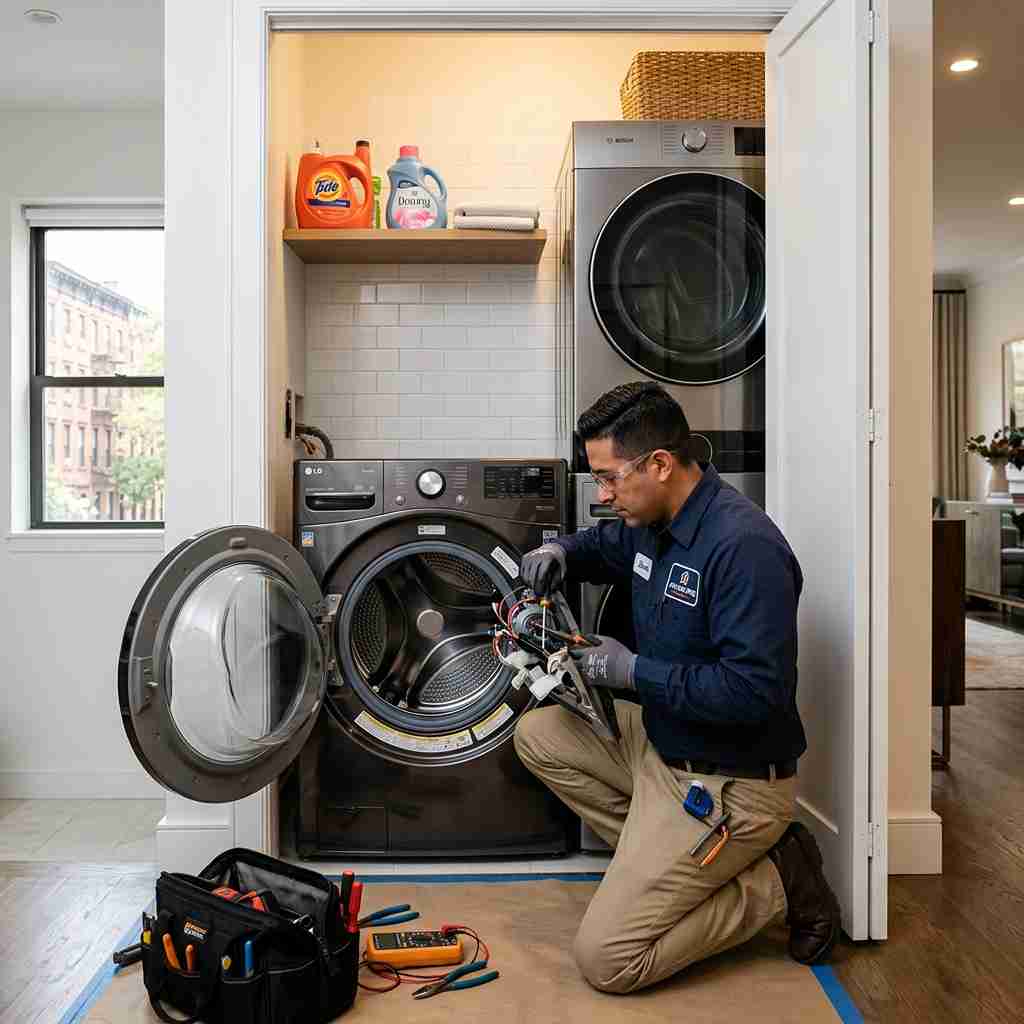
Expert Appliance Troubleshooting for Upper West Side
The good news is that the cause is often simple. But repeated or violent movement should not be ignored.
Quick Answer: Your washer usually shakes and walks because of an unbalanced load, uneven leveling feet, loose installation hardware, a flexible apartment floor, or worn internal suspension parts. If redistributing the clothes and leveling the machine does not solve the problem, professional washer repair may be needed.
Need immediate diagnostic help? Visit our dedicated washing machine repair page or speak with our certified technicians today.
Why Is My Washer Shaking and Moving?
Most cases start with something basic. Work through these causes in order before assuming the worst.
1. Unbalanced Load
An unbalanced load is the most common reason a washer shakes during the spin cycle. When heavy items bunch up on one side of the drum, the machine loses balance and starts to bang and move.
This happens most often with comforters, bath towels, rugs, heavy blankets, and jeans. A small load with a single heavy item is just as likely to cause problems as an overloaded drum.
Pause the cycle. Open the door and spread the clothes evenly around the drum. Pair a bulky item with a few similar-weight pieces instead of washing it alone. Do not overfill the washer and avoid running a single heavy blanket unless your model specifically supports it.
2. Washer Is Not Level
If one leveling foot is not making firm contact with the floor, the machine will rock. It may seem minor at first. During a fast spin cycle, that small wobble turns into full movement.
Common reasons a washer loses its level include cleaning shifts, relocation, loose lock nuts, and naturally uneven or sloped floors. After any appliance move, the feet need to be rechecked.
Quick Test: Unplug the washer. Gently push the machine from front to back and side to side. Any wobble means at least one foot is not sitting properly. Use a bubble level across the top, front to back and left to right. Adjust each foot until all four are in firm contact with the floor, then tighten the lock nuts to hold them in place.
According to Whirlpool, all four feet must be firmly on the floor. If the machine rocks when pushed from the top, the feet need adjustment and the jam nuts need tightening.
3. Shipping Bolts Were Not Removed
This one catches a lot of people off guard with a new washer. Front-load washers are shipped with transit bolts that lock the drum in place during transport. If those bolts are not removed before the first use, the machine will vibrate severely.
The bolts are usually located on the rear panel. Samsung specifically states that shipping bolts must be removed before the washer is used, and recommends pressing on the drum to confirm it moves freely after removal.
If your washer was recently delivered or installed, check the installation manual and confirm the shipping bolts are out. In a tight NYC apartment laundry closet, do not force the machine away from the wall yourself. Hoses and electrical connections can be damaged. Call the installer or a repair technician if you are unsure.
4. Flexible or Uneven Apartment Floor
This is where NYC apartments create their own set of problems. Older buildings often have wood subfloors that flex under load. Upper-floor units amplify vibration. A washer installed on a weak pedestal, uneven tile, or warped wood will shake harder than the same machine on solid concrete.
In a narrow laundry closet, even minor movement can cause the machine to knock against a wall, cabinet, or adjacent dryer. That contact creates extra noise and can cause damage over time.
Whirlpool advises against installing a washer on a raised wooden platform and recommends checking for floor flexing or sagging before installation.
Do not slide cardboard, loose boards, or unstable objects under the washer to compensate. If the floor issue is serious, involve your landlord or building super alongside an appliance technician.
5. Worn Shock Absorbers or Suspension Springs
Front-load washers use shock absorbers and suspension springs to dampen drum movement during the spin cycle. Over time, these parts wear down. When they do, the drum starts moving more than it should, and even a normal load causes violent shaking.
Signs of worn shock absorbers include shaking on every load, abnormal movement during an empty spin, loud thumping or banging noise, and a drum that seems to bounce inside the cabinet. If your washer used to run quietly and has gradually gotten worse, this is a likely cause.
According to PartSelect, worn shock absorbers can cause loud banging and excessive movement during unbalanced loads. When replacing shocks, both sides should be replaced at the same time.
6. Worn Drum Bearings
Bearing wear produces a deep rumbling or grinding sound that gets louder as the spin speed increases. You may also feel play in the drum if you move it up and down by hand. In some cases, a water leak, rust stains, or a metallic grinding noise comes with it.
Not every vibration is a bearing problem. Check load balance, leveling, and installation first. If those are fine and the rumbling continues, a technician needs to inspect the drum.
7. Damaged Internal Parts
This is the less common but more serious end of the spectrum. A cracked spider arm, broken suspension rod, damaged inner basket, loose counterweight, or failed motor mount can all cause the washer to shake badly.
Signs include metallic banging, scraping, a drum that looks visibly tilted, persistent shaking despite correct leveling, water leaking, or a burning smell. If you notice any of these, stop using the washer immediately and unplug it.
Quick Diagnosis Table
| What You Notice | Most Likely Cause | First Step |
|---|---|---|
| Shakes only with towels or blankets | Unbalanced load | Pause and redistribute |
| Rocks when pushed by hand | Uneven leveling feet | Adjust feet and tighten lock nuts |
| New front-load washer shakes violently | Shipping bolts still installed | Check installation instructions |
| Moves on every load | Leveling, floor, or suspension | Stop use and arrange inspection |
| Deep rumbling at high spin | Worn drum bearings | Professional diagnosis |
| Metal scraping or burning smell | Internal or electrical fault | Unplug immediately |
| Shaking started after a move | Loose feet or hoses | Inspect installation safely |
| Stacked unit makes cabinet move | Stacking frame or floor issue | Do not dismantle without support |
How to Stop Your Washer From Walking
Step 1: Stop the Spin Cycle
Do not let violent shaking continue. Pause the washer immediately. If you notice a water leak, burning smell, smoke, or metal grinding, unplug the machine.
Step 2: Redistribute the Clothes
Open the door and spread the load evenly around the drum. A single comforter or rug is a common offender. Balance it with a few similar-weight items and restart. Avoid running a severely underloaded or overloaded cycle.
Step 3: Check the Four Feet
Rock the washer gently. Every foot should be in firm contact with the floor. Adjust any foot that is floating and tighten the lock nuts. Samsung's leveling guidance emphasizes adjusting the feet, confirming stability by rocking the machine, and stopping the cycle immediately if excessive vibration returns.
Step 4: Check the Installation
If the washer is a front-load model, check the rear panel for shipping bolts. Check the screws on any pedestal or stacking kit. Make sure the drain hose, water hoses, and power cord are not pulled tight. The washer should not be pressed against a wall, cabinet, or dryer.
Step 5: Run a Short Test Cycle
Test with an empty drum or a small, balanced load. Watch the machine through the spin cycle. If the shaking returns, stop using the washer and schedule a repair inspection.
Apartment-Specific Washer Vibration Problems in NYC
Small Laundry Closets
Most NYC apartments fit the washer into a narrow closet, a kitchen alcove, or a stacked laundry setup. Any movement at all can cause the machine to knock against walls, cabinetry, or the dryer next to it. That contact noise is often mistaken for internal damage when the real issue is just clearance.
Older Building Floors
Old wood subfloors flex under the weight and movement of a spinning washer. If your machine is technically level but the floor itself bounces, adjusting the feet alone will not stop the vibration. This is a building issue that may need both a technician and a conversation with your super.
Shared Walls and Neighbors
Vibration travels through shared walls and floors in New York City buildings more than most residents expect. Avoid late-night spin cycles. Give the machine a small gap from the wall, but do not pull the hoses taut. Repeated banging noise is not something to adjust to. It signals a problem that needs fixing, not managing.
Stacked Washer-Dryer Units
A stacked unit requires a compatible stacking kit. If the frame is unstable, or if the dryer was added without a proper kit, the entire stack becomes a vibration problem. Do not attempt to separate or reposition the dryer on your own. Have a technician verify that the installation is secure.
Is a Shaking Washer Dangerous?
Mild movement from an unbalanced load is usually a quick correction. Violent or repeated shaking is a different matter. It can damage internal suspension components, crack hoses, stress the floor, loosen the pedestal, and harm nearby cabinetry.
Call for professional washer repair if:
- The washer walks on every cycle
- Load balancing and leveling have not fixed the problem
- The drum is banging or scraping loudly
- You hear deep rumbling during the spin
- The machine is leaking water
- The drum feels loose or tilted
- A new washer shook immediately after installation
- A stacked unit feels unstable
- You smell something burning
Still dealing with a washer that shakes, bangs, or walks across your NYC apartment floor? Our appliance repair technicians can inspect the load balance, leveling feet, installation, suspension system, shock absorbers, bearings, and other internal components to find the actual cause.
We handle front-load and top-load washers from Whirlpool, Maytag, LG, Samsung, GE, Electrolux, Frigidaire, Bosch, Miele, Kenmore, and other major brands.
We serve the Upper West Side and Manhattan, including ZIP codes 10023, 10024 and 10025. Same-day appointments may be available depending on your location and schedule. Every job starts with an in-home diagnosis and an upfront estimate before any work begins.
[Schedule an In-Home Washer Diagnosis →]
Frequently Asked Questions
Why does my washer shake only during the spin cycle?
The drum spins at high speed during this phase. That speed makes any imbalance, unlevel foot, or suspension problem more obvious. The root cause may exist throughout the cycle, but it becomes visible only when the spin starts.
How do I stop my washing machine from walking?
Pause the cycle, redistribute the clothes, and check all four leveling feet. If the machine moves on every load even after those corrections, a suspension or floor issue likely needs professional inspection.
Why is my new washer shaking violently?
A new front-load washer that shakes violently most likely has shipping bolts still installed or was not leveled correctly during installation. Samsung's installation guidance specifically calls out both of these steps before the first use.
Can an unbalanced washer damage my apartment?
Repeated violent movement can damage hoses, flooring, cabinetry, the pedestal, and internal parts. In a shared-wall apartment, the noise from a walking washer also becomes a neighbor problem quickly.
Should I put rubber pads under my washer?
Anti-vibration pads help reduce noise on some floor surfaces. They do not fix unlevel feet, worn suspension, failed bearings, or a bad installation. Address the actual cause first.
Why does my washer shake when it is empty?
An empty washer that still shakes rules out load imbalance as the main cause. The leveling, suspension rods, shock absorbers, bearings, or installation hardware should be inspected.
Why is my front-load washer banging?
Common causes include an unbalanced load, shipping bolts still in place, unlevel feet, worn shock absorbers, a loose counterweight, or damaged drum components.
How much does washer vibration repair cost in NYC?
The cost depends on the brand, model, specific fault, parts needed, and access conditions in your apartment. We provide a clear upfront estimate after the in-home diagnosis, so there are no surprises.
Can I use my washer if it is walking across the floor?
If the movement is minor and tied to a single unbalanced load, pausing and rebalancing is usually safe. If the washer walks on every cycle, or if you notice a leak, burning smell, or grinding noise, unplug it and arrange a repair before using it again.
NYC Washer Repair for Shaking and Vibration
Get transparent diagnostic repair with authentic OEM replacement parts throughout Upper West Side Manhattan. Fast response, courteous certified technicians, and written estimates before work begins.