How to Prevent Mold and Bad Smells in a Front-Load Washing Machine
Your washing machine is supposed to make clothes smell clean. When it does the opposite, leaving laundry smelling musty, sour, or stale, something inside needs attention.
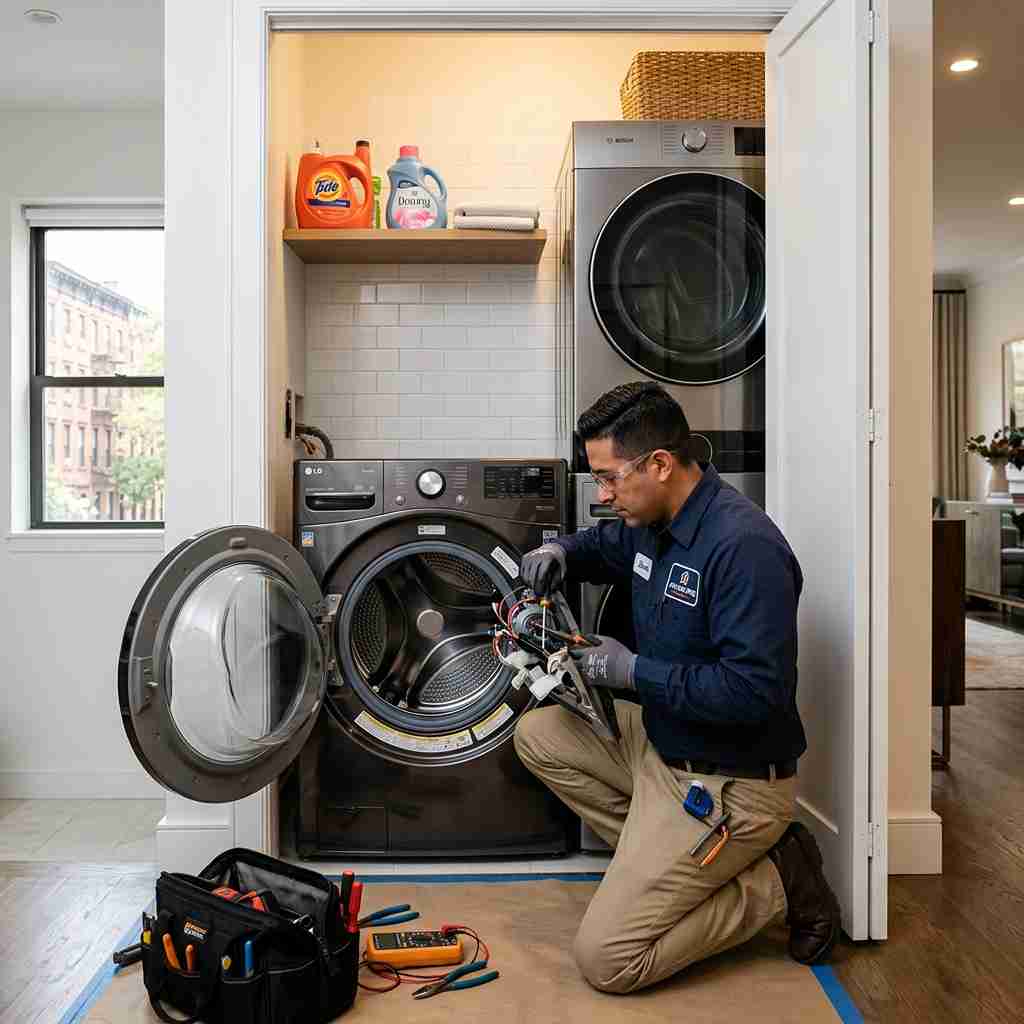
Expert Appliance Troubleshooting for Upper West Side
Front-load washers are efficient and water-smart, but their airtight door design creates a problem: moisture gets trapped. When water, lint, hair, and detergent residue sit inside a dark, closed drum, mold, mildew, and bacteria have exactly the environment they need to grow. The smell builds. Eventually, it transfers back onto your clothes.
The good news? Preventing mold and bad smells in a front-load washing machine is straightforward. A consistent routine handles most of it.
Need immediate diagnostic help? Visit our dedicated washing machine repair page or speak with our certified technicians today.
Why Does a Front-Load Washing Machine Smell Bad?
Before fixing the problem, it helps to understand where it starts.
Trapped Moisture in the Door Gasket
The rubber door seal, also called the door boot or gasket, has deep folds. Water, lint, and soap residue collect there after every cycle. If you close the door without wiping it down, that moisture stays. Over time, it creates a musty or mildew-like smell that doesn't go away on its own.
Too Much Detergent or the Wrong Type
More detergent does not mean cleaner clothes. It means more residue left behind.
Using non-HE detergent in a high-efficiency washer creates excess suds that don't fully rinse away. Liquid detergent collects in the gasket folds. Fabric softener leaves a sticky film on the drum. All of it feeds odor-causing buildup over time.
Wet Clothes Left Inside
A damp load sitting in a closed drum is a problem. The drum stays warm and humid after the cycle ends. That environment encourages odors quickly, especially with towels or heavy cotton items.
A Dirty Detergent Drawer
The dispenser drawer and its housing collect soap scum, water, and fabric softener residue. Small amounts of detergent that never fully dissolve sit in the corners. Left long enough, mold grows there too.
Clogged Drain Pump Filter or Drain Hose
Coins, hair ties, lint, and tissues can collect in the drain pump filter over time. A partially blocked filter may leave dirty water sitting inside the washer after every cycle. When that happens, you may notice slow draining, clothes that come out soaking wet, or a rotten-egg or sewage-like smell. Recurring odor after cleaning is another sign.
Poor Ventilation Between Cycles
A closed door and a closed detergent drawer trap humidity. If your laundry room is already damp, or if the washer sits in a garage or enclosed space, the problem compounds.
How to Prevent Mold and Bad Smells in a Front-Load Washer
1. Wipe the Door Gasket After Every Load
This one habit makes a significant difference.
After removing laundry, open the door and pull back each fold of the rubber gasket. Remove any lint, hair, or visible residue. Wipe the gasket and the inside of the door glass with a clean, dry towel. Pay extra attention to the bottom section, water pools there most often.
Keeping the door seal clean and dry after every use is the most reliable way to prevent mold in the washer gasket.
2. Leave the Door Open
Once the load is done, leave the washer door slightly ajar. Leave the detergent drawer partially open too. This allows air to circulate, moisture to evaporate, and the drum to dry between cycles.
Manufacturer guidance consistently recommends allowing both the tub and the detergent drawer to dry after each use. If children or pets have access to the laundry area, take appropriate precautions, but don't close the door completely right after washing.
3. Remove Wet Clothes Immediately
Transfer clothes to the dryer or hang them as soon as the cycle ends. Leaving a wet load inside overnight leads to musty laundry, sour-smelling towels, and odors that linger even after rewashing.
Don't let a clean laundry day turn into a second wash.
4. Use the Correct Amount of HE Detergent
Use detergent labeled HE, high efficiency. Follow the dosage instructions on both the detergent packaging and your washer manual. Avoid filling the dispenser to the maximum line unless the instructions specifically call for it. With concentrated formulas, you often need less than you think.
A thick layer of suds can leave behind more residue, not cleaner laundry.
5. Clean the Detergent Drawer and Dispenser Housing
Remove the dispenser drawer according to your owner's manual. Rinse removable parts with warm water and clean the corners with a soft brush. Wipe the inside of the dispenser housing. Let everything dry completely before reinstalling it.
Some models have removable siphon caps for the bleach and fabric-softener compartments. Clean those too.
6. Run the Manufacturer-Approved Tub Clean Cycle
Most front-load washers include a Tub Clean, Clean Washer, or equivalent cycle. Run it with only a cleaner your washer's manual approves. Don't add clothing. And know that the tub-clean cycle may not reach every surface, clean the gasket and dispenser separately.
LG recommends tub cleaning regularly, often monthly or after approximately 30 uses. Whirlpool recommends periodic deep cleaning of the gasket, door, and drum. Follow whatever your specific model's manual says.
7. Clean the Drain Pump Filter When Applicable
Not every front-load washer has the same accessible filter, and cleaning procedures vary by brand, LG, Samsung, Whirlpool, GE, Maytag, and Electrolux all handle this differently. Always check your owner's manual before opening any access panel.
If your manual permits it:
- Turn off and unplug the washer as instructed
- Prepare towels and a shallow container for residual water
- Carefully remove debris from the filter
- Rinse and inspect it
- Reinstall and tighten it correctly to prevent leaks
8. Use the Correct Cleaning Products
Follow the washer manual before reaching for bleach, vinegar, baking soda, or a commercial washer cleaner. Never mix bleach with vinegar, ammonia, or other cleaning agents, dangerous fumes can form. Use gloves, provide ventilation, and use one approved cleaner at a time.
Online cleaning advice is inconsistent. Some sources recommend vinegar; others advise against it for washer cleaning. The safest rule: prioritize your manufacturer's instructions.
Washing Machine Maintenance Schedule
| Frequency | Task |
|---|---|
| After every load | Remove laundry, wipe door glass and gasket, leave door open |
| After every laundry day | Leave detergent drawer open to dry |
| Weekly | Inspect gasket folds, dispenser, and visible drum surfaces |
| Monthly | Run the Tub Clean or Clean Washer cycle with an approved cleaner |
| Monthly | Deep-clean the door gasket and detergent dispenser |
| Every few months | Inspect or clean the drain pump filter if the manual permits |
| Immediately | Investigate standing water, slow draining, leaks, or persistent foul odors |
Cleaning frequency can vary by washer model, household size, laundry volume, and humidity. Always follow your manufacturer's recommended schedule.
How to Get Rid of Mold and Bad Smells in a Front-Load Washer
Prevention and removal are different. If your washer already has visible mold or a strong odor, it needs a deeper clean.
Step 1: Empty the washer. Remove all laundry and objects from the drum.
Step 2: Inspect the gasket. Check every fold for black or gray spots, slime, lint, standing water, foreign objects, or torn rubber.
Step 3: Clean the gasket. Use a soft cloth or soft brush with the manufacturer-approved cleaning solution. Avoid sharp or abrasive tools, they can puncture the rubber seal and cause leaks.
Step 4: Clean the dispenser and drum. Wash the drawer, housing, door glass, and drum surfaces before running any cleaning cycle.
Step 5: Run an approved cleaning cycle. Use the correct amount of manufacturer-approved cleaner and select the recommended cycle.
Step 6: Dry the washer completely. Leave the door and dispenser open until all moisture has evaporated.
Step 7: Recheck the odor. If the smell returns quickly, surface cleaning may not be enough.
Mistakes That Make Washer Odors Worse
Closing the door immediately after washing. This traps humidity in the drum and gasket.
Using too much detergent. Extra detergent leaves residue that feeds odor buildup.
Ignoring the detergent drawer. It's a hidden source of mold and one of the most overlooked spots.
Leaving wet towels in the drum. Towels hold moisture and develop a sour smell fast.
Mixing cleaning products. Never mix bleach and vinegar. Dangerous fumes can form.
Scrubbing the gasket with sharp tools. A punctured rubber seal causes leaks.
Assuming every washer works the same way. LG, Samsung, Whirlpool, GE, Maytag, and Electrolux all have different filter locations, gasket designs, and cleaning instructions. Model-specific guidance matters.
When to Call a Washing Machine Repair Technician
Cleaning handles most washer odors. But some problems go deeper than surface residue.
Call a professional washer repair technician if:
- The odor returns shortly after a thorough cleaning
- The washer leaves standing water in the drum
- The washer drains slowly or doesn't drain completely
- Clothes remain soaked after the spin cycle
- There's a sewage-like smell coming from the drain area
- The drain pump makes grinding, buzzing, or rattling sounds
- The door gasket is torn, loose, or leaking
- The washer displays a drain or error code
- Mold keeps returning inside areas you can't reach
- The washer leaks from the front or bottom
- The washer smells like burning or overheated wiring
If your front-load washer still smells after the gasket, dispenser, and tub have been cleaned, the problem may be connected to a clogged drain system, trapped water, a damaged door gasket, or a drain pump issue. A qualified appliance repair technician can identify the actual source instead of treating the smell again and again.
Need help with a washer that smells bad or won't drain? Contact our Upper West Side appliance repair team to schedule front-load washing machine service.
Call TechnicianFrequently Asked Questions
Why does my front-load washer smell like mildew?
The most common causes are trapped moisture, detergent residue, mold inside the gasket, a dirty dispenser, wet clothes left too long, or water remaining in the drain system.
Should I leave my front-load washer door open?
Yes. Leaving it slightly open after use allows air to circulate and helps the tub and gasket dry. Follow your model's safety and installation instructions.
How often should I clean my front-load washing machine?
Run the Tub Clean or Clean Washer cycle according to your owner's manual. Many manufacturers recommend approximately once a month or after a set number of uses.
Can too much detergent make a washing machine smell?
Yes. Excess detergent leaves residue in the drum, gasket, and dispenser that contributes to musty or sour odors over time.
How do I clean mold from a washing machine rubber gasket?
Remove visible debris, pull back the gasket folds, and clean with your manufacturer-approved solution. Wear gloves, ventilate the area, and never mix cleaning chemicals.
Why do my clothes smell bad after washing?
The washer may contain odor-causing buildup, clothes may have sat wet too long, the machine may not be draining correctly, or excess detergent may be leaving residue.
Why does my washer smell like rotten eggs?
A sewage-like odor often points to trapped dirty water, a clogged filter, a drain hose issue, or buildup in the washer or household drain. Persistent odors should be inspected by a technician.
Why does the smell come back after cleaning?
Recurring odor may indicate hidden buildup, incomplete drainage, a dirty pump filter, a damaged gasket, excessive detergent use, or a plumbing issue. A technician can pinpoint the cause.
Need Help With Washer Odor or Drain Issues?
Get transparent diagnostic repair with authentic OEM replacement parts throughout Upper West Side Manhattan. Fast response, courteous certified technicians, and written estimates before work begins.